Types of dental bridges
Adhesive bridges
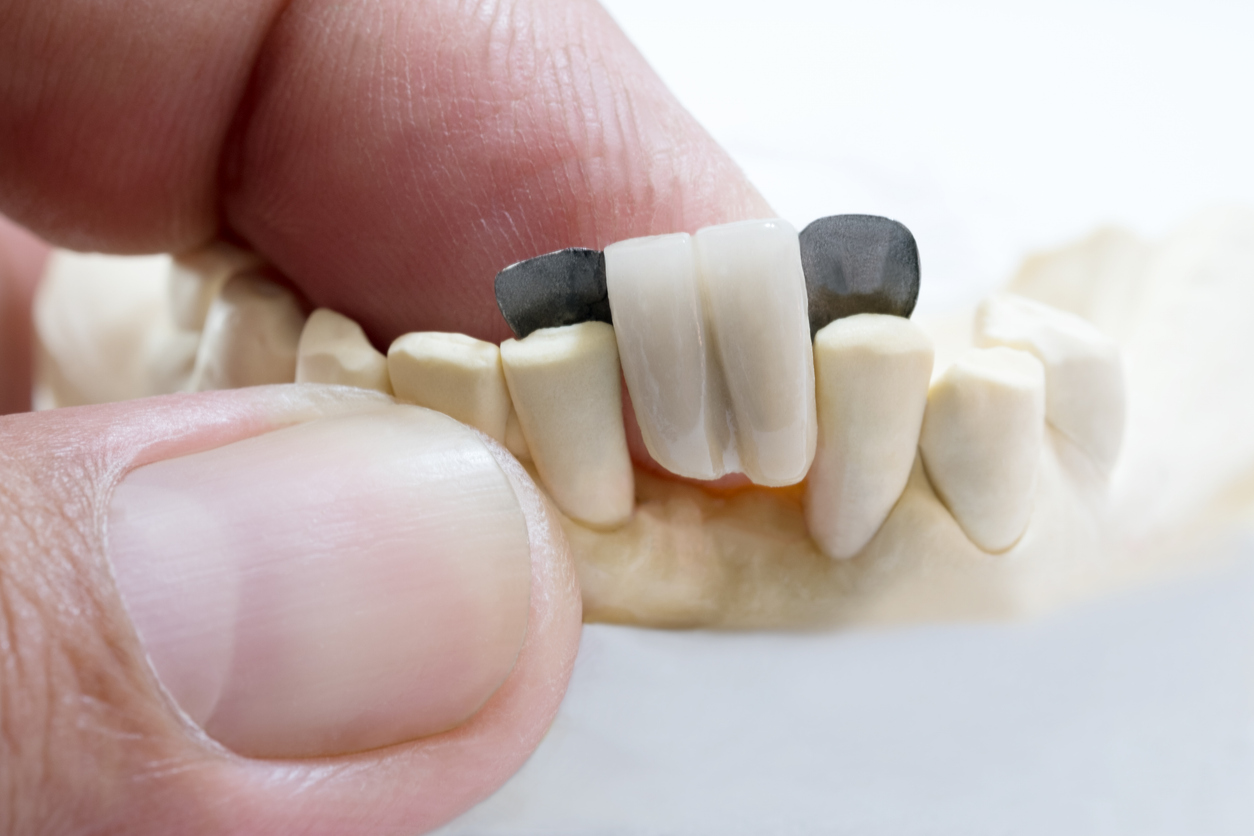
We often use the adhesive (or Maryland) bridge design for our patients. The major advantage is minimal preparation of teeth, a little bit like cosmetic veneers. These tend to be more successful on front teeth but the technology is improving so posterior adhesive bridges are better retained. They can be made with metal or ceramic wings (brackets) glued to hold the false tooth securely in place.
Conventional bridges
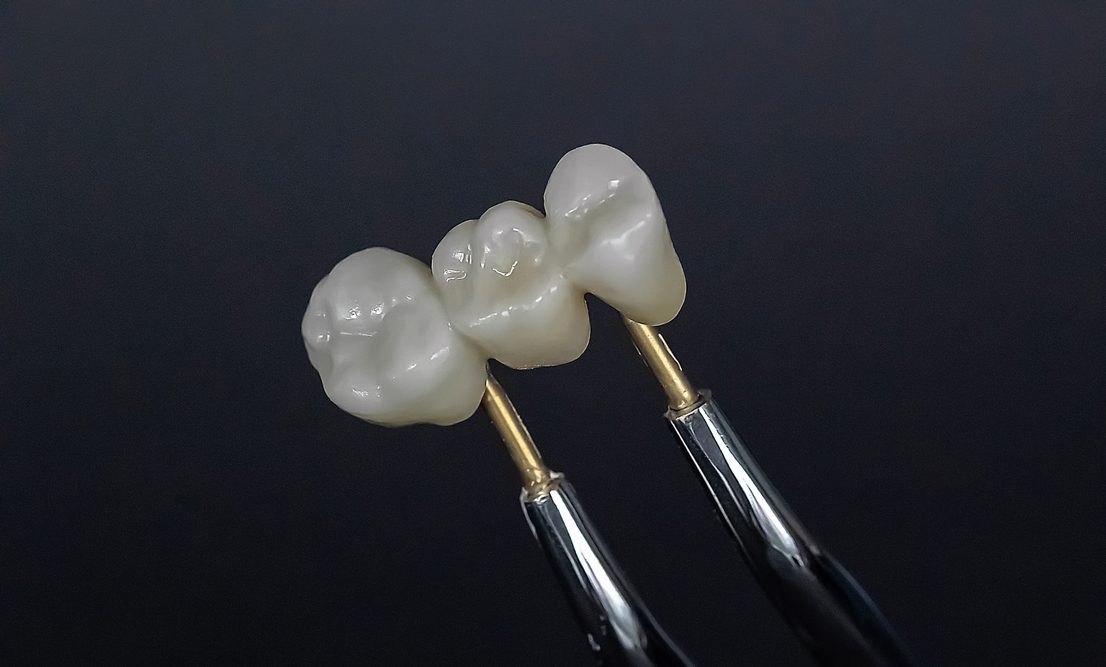
Where the teeth are already heavily filled, we can use a conventional bridge. They are really just a series of crowns beautifully linked to false teeth. The neighbouring teeth, known as abutment teeth, need to be prepared and often require some enamel to be removed. The replacement tooth is attached to bridge the gap and complete your smile.
What does the treatment involve?
We first make sure that the teeth that will support the bridge are healthy and strong. They are then prepared by removing a layer of enamel.
We take impressions of the prepared teeth. These are sent to the dental laboratory. While your bridge is custom-made, we provide you with a temporary bridge to protect the exposed teeth.
When ready, we check your bridge, making sure it fits perfectly and making small adjustments if necessary. Your bridge is finally fixed in place with strong dental cement.